
Richard Neville was born on 22 November 1428 and was the eldest son of Richard 5th Earl of Salisbury and Alice Montagu 5th Countess of Salisbury. Through marriage at an early age [in 1436] to Anne Beauchamp he became 16th Earl of Warwick. Inheritances by right of his wife saw him become one of the wealthiest non Royals in English medieval history. His level of influence led to him being popularly known as ‘Warwick the Kingmaker’ by historians. Richard Neville 16th Earl of Warwick died fighting against his cousin and former ally, King Edward IV, in the Battle of Barnet on 14 April 1471. He was buried alongside other members of the Neville family at Bisham.
Early years of Richard Neville
At an early age negotiations were made for Richard Neville to marry Anne Beauchamp. This marriage took place when Richard was aged eight, in 1436. Anne’s father was Richard Beauchamp 13th Earl of Warwick, a leading noble and one of the most highly thought of men within the realm.
Unexpected Inheritances? Becoming Earl of Warwick
Anne Beauchamp’s father passed away in 1439. This saw the Earldom of Warwick pass to her elder brother, Henry, as 14th Earl of Warwick. Henry was later created Duke of Warwick. The Duke of Warwick married one of Richard Neville’s sisters, Cecily, and the couple had one child, Anne. In 1446 Henry Duke of Warwick died aged 21. This led to his vast estates being inherited by daughter, who was aged 2 at the time of her fathers death. In 1449, the young 15th Countess of Warwick died, aged 5. Her heir was her aunt, Anne Beauchamp, the wife of Richard Neville. This made Richard and Anne the Earl and Countess of Warwick.
The Beauchamp Inheritance
The estates held by the niece, brother, and father of Anne Beauchamp were vast. So too was the influence afforded to the title: her brother had been elevated to being preeminent Earl of the land prior to being created Duke and had been ranked behind only the Duke of Norfolk in order of preeminence upon that promotion. The inheritance also included lands derived from Anne’s mother, Isabel Despenser.
Richard Neville Earl of Warwick: 1449-1453
In the period 1449 to 1453 the Earl of Warwick took control of his estates and began to take a role in regional and national politics. He served, as was typical of magnates with northern connections, in campaigns against the Scots. As unrest occurred nationally, the Earl sided with King Henry VI and senior courtiers such as the Duke of Somerset. This included the Earl of Warwick and his father being part of the Royal force that faced the Duke of York at Dartford/Blackheath in 1452. This was not surprising, the Earl of Warwick was related to most of the senior Lancastrians and the value of his inheritance was derived from this affinity.
Taking Sides: The Earl of Warwick allies with the Duke of York
In 1453 the Earl of Warwick and his father the Earl of Salisbury joined with the Duke of York and formed a faction that would become known as the Yorkists. This, just a year after standing against the Duke of York at Dartford, was due to concerns over the security of Neville lands. The Duke of Somerset, a cousin of the Neville family, threatened elements of the Earl of Warwick’s inheritance. There were also conflicts in the north with the Percy family which were seeing the involvement of other senior nobles, such as Henry Holland Duke of Exeter.
To protect their interests, they joined forces with the Duke of York who was already in disputes with the same magnates that now posed a problem to the Neville family. This led to the Earl of Warwick and his father becoming drawn into national politics alongside dealing with regional feuds. In concert with the Duke of York, they formed an opposition to the clique that surrounded Queen Margaret at Court.
The King’s Incapacity
When King Henry VI became incapacitated in 1453, the Duke of York was chosen to act as Protector of England [Appointed Spring of 1454]. Ruling in the King’s stead, Richard Duke of York selected his allies to fill positions on Council. This brought conflict with the Duke of Somerset between the now ruling Yorkist faction to a head. Edmund Beaufort 2nd Duke of Somerset was subsequently imprisoned on the orders of the Duke of York. This lasted until the return to personal rule of King Henry VI. Upon his release, Edmund Duke of Somerset sought revenge on those he held responsible for his incarcaration: and this included Richard Neville 16th Earl of Warwick.
1455: The Earl of Warwick and the First Battle of St. Albans
The resumption of King Henry VIs personal rule brought with it the release of Edmund Beaufort Duke of Somerset. The Yorkist lords, including the Earl of Warwick, were no longer in the ascendancy at Court. As a consequence, relations between the factions worsened, with vengeance sought by the Duke of Somerset for the wrongs he felt had been done to him and increased paranoia and suspicion from both parties.
A Great Council called
Matters came to a head in May 1455. A Great Council was called, to be held in Leicester. It seemed that the Lancastrian faction around the Queen were about to take political and legal reprisals against the Yorkist lords. The Yorkist lords chose to prevent the Royal party and Lancastrian lords from reaching Leicester. They did so in what became the First Battle of St. Albans. Here the two sides initially faced off over barriers, with attempts made to negotiate between the two parties. When it became clear to the Yorkists that their messages were in vain, they attacked.
Role of Richard Neville at St. Albans
In this brief battle, Richard Neville 16th Earl of Warwick played a decisive role. His men were ordered through back streets of St. Albans. Skirting around the defended barricades, they surprised the Lancastrian defenders. The outcome was bloody. Edmund Beaufort Duke of Somerset was tracked down and slaughtered by the Earl of Warwick’s men. So too were Lord Clifford and Henry Percy 2nd Earl of Northumberland cut down.
Richard Neville appointed Captain of Calais
In a stroke, Richard Neville had rid himself and his allies of three of the most powerful and vocal of their political foes. It was to have longlasting reprisals with vengeance sought by the sons and kin of the fallen Lancastrians. However, in the short term, the Yorkists resumed their control of Court. Richard 3rd Duke of York returned to the position of Protector, and the Earl of Warwick was given the significant position of Captain of Calais, along with the Stewardship of Monmouthshire.
As with the previous instance of a Protectorship in King Henry VIs reign, the Yorkist dominance was to crumble with his return to personal rule. Alongside further regional clashes and vengeance attacks, there was a renewed political clash between the two factions. Attempts were made to bring about peaceful resolutions to the differences between the Earl of Warwick, his allies, and the opposing faction centred around the Queen and Prince Edward [of Westminster]. These attempts failed.
1459-61: Warwick the Kingmaker
Following the Loveday Parade of 1458 the political divisions between the factions at court continued to grow wider. The Earl of Warwick withdrew to Calais following a possible assassination attempt in November 1458. Both sides of the political divide prepared for the possibility of conflict. In 1459, it happened.
Ludlow
The Yorkist Lords agreed to converge at Ludlow, the primary seat of the Duke of York. Richard Neville returned from Calais with a contingent of the garrison. He made for the midlands where he could gather additional men from his estates. At the same time his father headed south from Middleham. Whilst the Earl of Warwick was not challenged by a Lancastrian force, his father was. The Battle of Blore Heath saw the Earl of Salisbury overcome a force intended to block his path. When the Yorkists met at Ludlow, it was now very clear that they would face armed force from their rivals.
Flight from Ludford Bridge
King Henry VI was present as a force in his name marched on Ludlow. It led to the two parties facing off across the river at Ludford Bridge. Men of the Calais Garrison whom had travelled with the Earl of Warwick chose to desert the Earl in the night, making their way to the King’s ranks. This made a Yorkist success unlikely, and so the Earl of Warwick along with other leading Yorkists took flight: the Earl heading, with his father and Earl of March, to Calais.
Earl of Warwick attainted and stripped of positions by the Coventry Parliament
The Lancastrians were in pursuit, militarily and politically. The Earl of Warwick was amongst those attainted by the Coventry ‘parliament of devils’. His position as Captain of Calais was granted by this Parliament to the Duke of Somerset, who set out to take Calais from the Earl of Warwick through force of arms.
Calais
Whilst facing Lancastrian attempts to oust him from Calais, Richard Neville was able to orchestrate a raid on Sandwich in Kent, sail to Ireland to meet with the Duke of York, and repelled the Duke of Somerset’s assault in the Battle of Newnham Bridge. Combined, they provided a platform for the Yorkists to launch their armed return to England.
Yorkist successes in London and at Northampton
The Earl of Warwick and his allies landed at Sandwich, then proceeded to London. This led to the 1460 Siege of the Tower of London. A Yorkist force under the Earls of Warwick and March headed to challenge the Lancastrians. They did so, successfully, at the Battle of Northampton in July 1460. King Henry VI was now in the hands of the Yorkists. A chaotic political period followed as the Duke of York returned from Ireland and claimed the Crown by Right, resulting in the compromise of the Act of Accord.
Act of Accord
Lancastrian resistance to the Act of Accord saw increased threats to the properties of Yorkist lords in the north. In December 1460 the Duke of York, his son the Earl of Rutland, and the Earl of Salisbury rode north to tackle the rebellious Lancastrian nobles. In circumstances which are somewhat confused, the three Yorkist Lords were all killed. [The Battle of Wakefield has recently seen new evidence brought forward by Dr David Grummitt and Mr Paul Dawson which shows that the ‘battle’ was probably far from being a battle in the usual sense. See here].
Earl of Warwick organises Yorkist response to death of the Duke of York and Earls of Salisbury and Rutland
The deaths of his father [the Earl of Salisbury] and the Duke of York threatened the future of the Yorkist cause. Richard Neville Earl of Warwick had control of London when news arrived of their fate. The Earl of March, the heir to the Yorkist claim, was in the west raising forces. The Earl of Warwick organised the resistance to a resurgent and well armed Lancastrian force. London was readied. Diplomatic ties were made use of to garner support.
As Queen Margaret‘s force headed south in early 1461, the Earl of Warwick set out to stop it. Despite a set back in their defeat at the Second Battle of St. Albans, the Earl’s force was able to slow the Lancastrian advance. He then joined with Edward Earl of March, who was fresh from his victory at Mortimer’s Cross, in the Costswolds and together they returned to London.
Yorkist counteroffensive of March 1461
In short order, the Yorkists under the Earl of Warwick’s lead then proclaimed Edward to be King of England, resisted the Lancastrian force at London’s gates and saw it march north to regroup, and set about a rapid recruitment to enable the Yorkists to engage their enemy.
What followed was the campaign north which culminated in the defeat of the Lancastrian forces over a series of clashes near Tadcaster. This saw the Earl of Warwick injured in a clash, with the Yorkist force then going on to rout the Lancastrians in the Battle of Towton [See forthcoming publication by Paul L Dawson on the Battle of Towton, it uses previously unpublished contemporary evidence that alters our understanding of where, when and how the battle was fought].
1461-68: Ascendancy then Disgruntlement of Richard Neville 16th Earl of Warwick
Following the Yorkist victory of late March 1461 the Earl of Warwick took on the task of eradicating Lancastrian resistance in the north of England. Along with his brother, John Neville Lord Montagu, he set about besieging castles that remained loyal to King Henry VI. The pair also resisted Scottish attempts to intervene on the Lancastrians behalf. It took a little over three years to rid the region of supporters of Queen Margaret and King Henry VI. It included sieges at Alnwick. Bamburgh and Dunstanburgh along with battles at Hedgely Moor and Hexham to secure the region.
Alongside this, Richard Neville held huge sway in court as his backing had brought about the kingship of Edward IV. He and his brother were rewarded for their role. But this position of dominance at court began to alter following the marriage of King Edward to Elizabeth Woodville in 1464. The Earl of Warwick’s policies with regards European powers were challenged. Positions of state and regional ones were being granted to members of the Queen’s family. It led to the Earl of Warwick and the Duke of Clarence becoming disillusioned.
1469: The Earl of Warwick and Duke of Clarence in Revolt
In 1469 George Duke of Clarence married Isabel Neville, daughter of the Earl of Warwick. The marriage, held in Calais, had been opposed by King Edward IV. On the very next day, the Duke and Earl of Warwick issued a proclamation from Calais. It was essentially a list of grievances that they had about the manner in which King Edward was governing. As these events took place across the English Channel, a revolt led by ‘Robin of Redesdale’ broke out in the north of England. The rebellion had been coordinated by the Earl of Warwick to distract the King.
Edward IV a captive of Richard Neville 16th Earl of Warwick
The King responded to the rebellion in the north. As he travelled to tackle the rebels, he learnt of the actions of his brother and cousin. An army loyal to the King then found itself facing the rebels – but not the Duke of Clarence or Earl of Warwick. The Battle of Edgcote saw Edward’s supporters defeated. The King was soon in hands of the Earl of Warwick and Duke of Clarence. Richard Neville had his cousin sent to Middleham, and he and the Duke of Clarence attempted to rule in Edward’s name whilst he was their prisoner.
Flight to France of the Duke of Clarence and Earl of Warwick
Other, unlinked, revolts at the time and a lack of support from other nobles made it hard for the Earl of Warwick to enforce his will on government in the Kings absence. Soon Edward was back in personal charge with a short period of uneasy collaboration between the King, Duke and Earl. This lasted into 1470, when another revolt, again influenced by the Earl of Warwick, broke out. The Lincolnshire Rebellion led to the Earl of Warwick and Duke of Clarence taking flight as Edward IV defeated the rebels at Losecote Field and discovered his cousin and brothers involvement. They fled to France.
1470: Richard Neville and the Angers Agreement with Margaret of Anjou
Having taken flight to France the Earl of Warwick considered his options. He and the Duke of Clarence had attempted to exert their influence twice. They had limited success in the first instance, resulting in Edward IV resuming personal rule. Their second attempt had resulted in flight. In simple terms, they lacked enough wider support from the nobility to force their claims and despite their considerable wealth, did not have enough power to seize and maintain control of government.
Terms of Agreement between Queen Margaret and Richard Neville Earl of Warwick
It meant that the suggestion of the French that they consider talks with the Lancastrian Court in exile were taken seriously. Having fought against Queen Margaret and her faction in 1459-61 to placed Edward IV on the throne this may seem odd. In 1470, it was the case that the only realistic way that either the Earl of Warwick, or Queen Margaret, could achieve their aims was through working together. The result was the Angers Agreement. It saw Richard’s daughter, Anne Neville, marry Edward Prince of Wales. The Duke of Clarence was placed within the Lancastrian order of inheritance. The two sides would coordinate their efforts to restore King Henry VI.
As a result of the agreement, the Earl of Warwick and Duke of Clarence set out for England. They landed at Plymouth on 13 September 1470. Other changes in allegiance played into their hands, as John Neville Earl of Northumberland [at this time] opted to side with his brother and the Duke. Within weeks, King Edward IV was forced to flee to Flanders where he remained in exile until March of 1471.
Readeption of King Henry VI
King Henry VI was restored as a result of the return of the Earl of Warwick and Duke of Clarence, combined with Edward IV fleeing to the continent. Some of the senior Lancastrian nobles returned to England and enough of the nobility were willing to accept the Angers Agreement to make governance viable.
On 3 October 1470, King Henry VI was restored to the throne. Rule, however, was done in his name, rather than through his active leadership. In effect, the Earl of Warwick was an unstated protector, albeit with many influential Lancastrian magnates involved in aspects of governance.
The Readeption saw one Parliament summoned in King Henry’s name. It assembled in November 1470. No records from the sessions have survived. A summary of what is known about it can be found on the History of Parliament website.
Richard Neville 16th Earl of Warwick and the Battle of Barnet
The Readeption saw England’s relationship with European Powers change. The Earl of Warwick committed to support France in their dealings with Burgundy. This had an impact in the spring of 1471. When France attacked Burgundian held lands, they had the tacit support of the new English regime. Edward IV was in exile in Flanders, part of the Burgundian realm. It resulted in the Duke of Burgundy being willing to assist the Yorkist cause, it now made sense for him as it could bring about an end to the Anglo-French alliance which threatened him.
Return of Edward IV to England
As a result, Edward IV and his supporters set sail from Burgundian controlled lands and sailed for England, landing at Ravenspur [and other loctions] in March 1471. The response of the Earl of Warwick was to call his supporters to arms. As Edward marched south he was gathering support, including the return to his side of his brother, the Duke of Clarence.
Richard Neville Earl of Warwick was in the midlands recruiting when word of the Duke of Clarence’s defection reached him. He neglected to meet the Yorkists on the field of battle as they challenged him, waiting for his army to reach its full strength. This meant that the Yorkists were able to march on to, and take, London, unopposed.
Battle of Barnet: Death of Richard Neville ‘Warwick the Kingmaker’
When the Earl of Warwick had gathered enough support, including being joined by several Lancastrian magnates and their entourages, he advanced. The result was the meeting of the army of Richard Neville Earl of Warwick and his Lancastrian allies against that of Edward IV at Barnet. At Barnet, on 14 April 1471, the Yorkist army defeated the army led by the Earl of Warwick. In the battle both the Earl of Warwick and his brother John, now the Marquess of Montagu, were killed.
The bodies of the Earl of Warwick and Marquess of Montagu were displayed to the public in St. Paul’s Cathedral, London, for three days. Following this, their remains were transferred to Bisham Abbey in Berkshire where they were buried alongside their parents.
Richard Neville Earl of Warwick was survived by his wife, Anne Beauchamp Countess of Warwick who lived until 1492. His daughters Isabel and Anne also survived him. Inheritance of the Earl’s estates was hotly contested, as discussed in relation to Barnard Castle here.
Books relating to the life of Richard Neville ‘Warwick the Kingmaker’
Betrayal in the Wars of the Roses – the Earl of Warwick features heavily in my book on the subject of betrayal in the period. He is subject to an individual analysis of [roughly] 14000 words and appears frequently within assessments of other individuals, places, and themes.
Warwick the Kingmaker – Professor Michael Hick’s 2002 biography of Richard Neville.
Warwick the Kingmaker – Paul Murray Kendall’s biography of the Earl. Published in 1957 it was groundbreaking at the time. Some aspects of the Earl’s life have since been reappraised as a result of new documentary finds and/or interpretation.
Links: Richard Neville 16th Earl of Warwick ‘Warwick the Kingmaker’
Biography of Warwick the Kingmaker – a lengthy biography of Warwick the Kingmaker can be found on one of my other websites. This was originally written for A-Level History students.
British Museum – objects related to Richard Neville Earl of Warwick and Salisbury.
EBSCO – Research Starter pack relating to the life of Warwick the Kingmaker.
National Portrait Gallery – Richard Neville Earl of Warwick appears in 3 portraits held by the National Portrait Gallery.
Oxford Dictionary of National Biography -Neville, Richard, sixteenth earl of Warwick and sixth earl of Salisbury [called the Kingmaker]
The National Archives – items within the national archives relating to Richard Neville Earl of Warwick. Additional entries may be found by varying the search term within ‘discovery’ on the archival website.
Featured Image
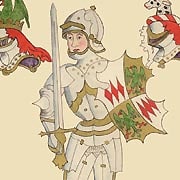
Founders and Benefactors Book of Tewkesbury Abbey: Richard Neville, Earl of Warwick (killed in battle 1471), ‘the King-Maker’, assumed the lordship of Gloucester and appropriated Sherston church to the convent: he stands holding his unsheathed sword upright.