
Tackling the resistance of Lancastrians who had holed up in castles in the north-east of England was a priority for the Yorkist regime following victory in the battle of Towton. With several large and formidable castles being held in the name of King Henry VI, it was a potentially massive undertaking. When the Earl of Warwick and his brother, Lord Montagu, began their campaign to oust the Lancastrians from Northumberland they faced not only Lancastrian resistance but also military intervention from Scotland and France.
The Paston Letters outline some of the events surrounding the clashes between men led by the Earl of Warwick and the Lancastrian-Scottish forces in particular. These letters show the logistical side of operations, note diplomacy, and note the movement of some of the key players in this phase of the Wars of the Roses.
Logistics of War
On 3 July 1462 J Daubeney write to John Paston. The letter relates to a variety of matters, all involving Crown officials. It starts by noting how the Lord Tresurer, John Tiptoft, Earl of Worcester, had discussed the movements of a ship named the Mary Talbot. Then Daubeney goes into more detail with regards the Barge of Yarmouth.
‘Sir, I pray you that ye wolle take avisment of this mater tille to morowe, for I trost to your good faderhod that ye wolle late me have a serteyn of your bulloks for the vetelyng of the Barge of Yermothe, and I shall fynd you sufficiant suerte for the payment therof for Edmonds. I wolle that ye knowe I have be ther, and spoke with the owner and with the maister of the seyd barge, and they knowyn myn oppoyntment.’
Than the seyd Edmonds answered to yong Debnam, and told hym that the sety of Norwic and Yermothe hathe grauntyd, and send wrytyng to the Kynge and to the Lords that they wolle manne and veteylle the seyd barge of her owne cost fro the tym of hyr goyng owt tylle hyr comyng home; and thus the seyd Edmonds told hym that my Lord Tresorer and all the Lords that be at London thynk they do ryght well her devyer, and be worthey moche thanke of the Kyng. ‘Well,’ quod yong Debnam, ‘I had in commaundment for to have the rewle of the seyd barge, and I wolle be at Yermothe as thys day iiij. dayys, and man hyr and bryng hyr downne to the Gylys of Hulle, for that ys my chype.’
Also he seyd mor, with out that he myght have the seyd barge, he wolle note goo to see but hym self and hys xxiiij. men. And thus, yf please your maisterchep, he departyd from the taveran; and at hys departyng, he told the seyd Thomas Edmonds, ‘Thys ys Paston labor.’ Than the seyd Edmonds answerd hym ageyn, and seyd playnly he was to 44blame for to reporte so of your masterchep, for he knoythe veryly he seyd on trewly of you and of my master your son bothe, and ther on he wold take a hothe. And so, yf it please your good masterchep, late the cety of Norwic and Yermothe have knowlage of hys gret crakyng and bost, and let hym of hys purpose by the autorite that they have.
The King, or his officials on his behalf, had instructed that the Barge of Yarmouth be set aside for use by the Crown, with costs being covered from the date of sailing to the date of return. We know this to be the case from other records. The Crown arrested [demanded use of] a ship called The Barge of Yarmouth, alias The George, via a commission issued on 27 June 1462. The barge, and others like it, were being used to take supplies to the north in support of the campaign against the Lancastrians and Scots.
The Earl of Warwick and the Scots
Daubeney alo notes events in the north-east, with particular reference to the Earl of Warwick and the Scots.
Item, sir, if pleese suche tydyngs as I her of, I send you word. My Lord of Warwek hathe be in Skotlond, an take a castell of the Skoots; and upon thys ther came the Quene of Skoots44.2 with other Lords of her contre, as ye shall her the namys, in basetry [embassy] to my seyd Lord of Werwek, and a trews is take betwyx thys and Seynt Bertylmew Day in Auguste. Thes is the last tydyngs that I knowe. No mor to your god masterchep at this tyme, but Jesu have [you] in kepyng.Wretyn on the Saturday next after Seynt Peter.By your por servaunt,J. Daubeney.
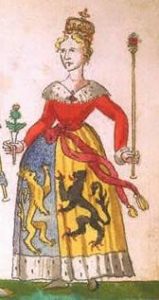
The events that Daubeney is referring to are the truce that was agreed between the Earl of Warwick and Queen of Scotland. This truce was to last from June until August 1462 [St. Bartholemews Day]. The source seems to suggest that the Earl had been into Scotland and taken a castle. This is a little unclear as the Earl met with Mary of Guelders earlier in the summer of 1462 at which the truce was negotiated. In terms of Castles falling at this time, there were none known to have fallen shortly before 3 July 1462. The Yorkists launched an assault on Alnwick during the truce with Scotland, though this castle had not fallen by the date of Daubeney’s letter. Other Sieges did take place in the period but again, they were not over until after the date of this letter. Kirkoswald and Naworth, both in Cumberland, fell to the Yorkists in July of 1462 but not before Daubeney put pen to paper.
Risk of Scottish intervention
The Earl of Warwick and King Edward IV were concerned about the possibility of Scottish involvement on behalf of the Lancastrians. This was based on events of 1461, when Scottish forces had laid siege to Carlisle, and the history of Margaret of Anjou securing support for her cause in 1460 and 1461. Despite the embassies and short term truces that were agreed in the summer of 1462, the Lancastrians did receive aid from Scotland and France until they were defeated at Hexham. Information about the scale of that Scottish support can be found in this post.
Embassies and a fear of an assault on Calais?
Thomas Playter to John Paston
To my rigth good maister, John Paston the oldest, beyng at Heylesdon, besyde Norwiche, in hast.
1462, July
PLEASE your maistership wete that Christofer Hanson is ded and beryed; and as for executor or testament, he mad non.
As for tydyngs, the Erles of Warrewyk, of Essex, Lord Wenlok, Bysshop of Dereham, and other go in to Scotland of inbassat. And as for the sege of Kaleys, we here no mor ther of, blyssed be God, ho have you in His kepying.
Item, as for Christofers papers that longeth to your tenants, I have goten of William Worcester; and as for all the remnaunt of Christofer good, William Worcester hath the reule as hym semeth most convenient. Your,Thoms Playter.
This letter, probably written shortly after July 17 1462 talks of the Earls of Warwick and Essex, along with John, Lord Wenlock and the bishop of Durham going to meet with the Scots. This shows ongoing diplomacy to try and keep the Scots and their allies the French out of the confict between the houses of York and Lancaster.
The follow up to Playter’s commentary of the movements of the Earl of Warwick is intriguing. News of the sege of Kaleys is noted. Playter is referring to Calais here, which may seem confusing as there was no Siege of Calais in 1462. However, there was a very real fear of Calais being besieged. This stems from the negotiations that Margaret of Anjou had undertaken with the Scots and the French. In much the same way that she had offered Berwick-upon-Tweed to the Scots in return for military aid, the same was applied to Calais and the French.
From Dr. David Grummitt:
Margaret had dangled the surrender of Calais (if Louis could capture it) in return for help in the north of England.
Margaret of Anjou’s efforts to raise a French army to invade England in return for the secession of Calais posed a potentially more serious threat. Louis XI at first seemed willing to support such an endeavour but raids on the French coast by the earl of Kent may have persuaded him against a wholehearted support of the Lancastrian cause. Nevertheless, in October 1462 some 800 French soldiers, under the command of the experienced captain, Pierre de Brézé landed at Bamburgh in Northumberland. Before long both Dunstanburgh and Alnwick had fallen to the invaders and their Lancastrian allies.
Sir Richard Tunstall captured
Thomas Playter to John Paston
To my maister, John Paston, at Heylesdon.
1462
JULYITEM, plese you wete of other tytyngs. These Lords in your other letter, with Lord Hastyngs and other, ben to Karlyle to resseve in the Qwen of Scotts; and uppon this appoyntement, Erle Duglas is comaunded to come thens, and as a sorwefull and a sore rebuked man lyth in the Abbey of Seynt Albons; and by the said appoyntement schall not be reputed, nor taken, but as an Englyssheman, and if he come in the daunger of Scotts, they to sle hym.
Item, Kyng Harry and his Aderents in Scotland schall be delyvered; and Lord Dakres of the Northe is wonne and yelden, and the seid Lord, Sir Richard Tunstall, and on Byllyngham in the said Castell ben taken and heded.
Item, the Qwen and Prince ben in Fraunce and ha mad moche weyes and gret peple to com to Scotland and ther trust to have socour, and thens to com in to Inglond: what schall falle I can not sey, but I herd that these appoyntements were take by the yong Lords of Scotland, but not by the old.Your,Plaiter.
Playter discusses the diplomacy taking place at Carlisle Castle. The Earl of Douglas had by this point been installed by Edward IV as a Knight of the Garter, so his coming to England because of a danger to him from the Scots is hardly surprising. Reference is given to King Henry VI and his adherents travelling to Scotland.
Playter then goes on to note that Sir Richard Tunstall had been taken and ‘heded’. This appears to be Player relating gossip rather than fact. Sir Richard was taken prisoner by the Yorkists but not until the fall of Dunstanburgh which was later in the year. He was one of the Lancastrian captains within the defence of that castle and at this stage had not been taken prisoner. When he was taken by the Yorkists he soon found his way to freedom and was involved in later sieges both in the north east and, briefly, at Harlech. He was very much alive after the Battle of Hexham as he is cited as being one of the loyal men who escorted King Henry VI into Lancashire where he hid until he was betrayed. This would add up, as Sir Richard Tunstall’s landholdings were in Lancashire.
The Paston Letters and the Earl of Warwick’s campaign in the north-east
The Paston Letters provide real time evidence of what was happening. Some of this, however, is gossip or rumour, rather than hard fact. The letters portray news as it is received, either accurately or otherwise. This in itself does not render the sources as worthless. The relaying of things that have been heard gives an insight into the gossip of the day and the types of thing that the gentry and their acquitances were concerned about. Much of the correspondence relates directly to things that impacted upon the business interests of the paston family. Others seek to update the family about poltical or military matters that might be of concern to them. In respect of the campaigning in the north-east they show that the attempts to oust the Lancastrians from the castles on Northumberland’s coast were ongoing, confusing at times, and accompanied by much diplomatic work. These letters also make a point that is often overlooked. Whilst the castles in the north-east were of great value, so too was control of the north-west. Carlisle had been besieged in 1461, relived by John Neville, Lord Montagu, and held as a matter of importance by the Yorkists.
Featured Image
By Tim Simpson – originally posted to Flickr as Dunstanburgh Castle, CC BY-SA 2.0, Via Wikimedia