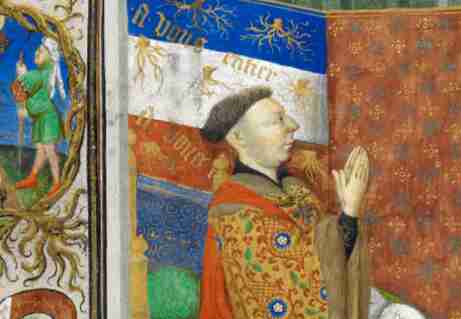
John Duke of Bedford [1389 – 1435] was the third son of King Henry IV and Blanche of Lancaster. He was an important Statesman during the reigns of his brother, King Henry V, and nephew, King Henry VI. John 1st Duke of Bedford acted as Regent of France following his brothers death. He also held a senior position in the Minority Council that ruled on behalf of the infant King Henry VI. John Duke of Bedford oversaw English rule in France at the time of Joan of Arc. He married firstly to Anne of Burgundy, and secondly to Jacquetta of Luxembourg. John died in Rouen on 14 September 1435 and was laid to rest in Rouen Cathedral.
John Duke of Bedford under King Henry V
King Henry V created his brother Duke of Bedford in 1414. When the King embarked on his campaign of 1415, he installed John Duke of Bedford as his Lieutenant in England. This saw John oversee arrangements for the visit to England of Emperor Sigismund. The Duke of Bedford then took up military command for his brothers campaigns in Normandy, commanding the fleet which successfully broke the French-Genoese blockade of Harfleur. He then returned to England and resumed the role of Lieutenant as his brother set about the Conquest of Normandy. In 1417 he relieved the Berwick which was under siege from the Scots. As Lieutenant, John Duke of Bedford also oversaw the arrest, trial, and execution of Sir John Oldcastle.
Treaty of Troyes
In May 1420 John accompanied King Henry V and Thomas Duke of Clarence to France. The trio confirmed an agreement with the Burgundians, who were incensed at the murder of John the Fearless by the French Armagnac faction. The result was the ability to exert pressure upon the French Crown. On 21 May 1420, the Treaty of Troyes was signed, with the Duke of Bedford present. This treaty named King Henry V and his heirs as next in line to the throne of France. It also resulted in the King marrying a French Princess, Catherine of Valois. From June 1420, John Duke of Bedford’s role was to be predominantly defending his brothers rights under this treaty.
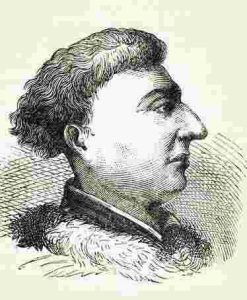
John Duke of Bedford as Regent of France
1421-22 was a period of turmoil in the Courts of England and France. March 1421 saw the death of Thomas Duke of Clarence at the Battle of Bauge. This made John the senior surviving Royal Duke. He acted as Lieutenant of England again as his brother campaigned in France, before returning to France as Queen Catherine’s escort in May 1422.
In August 1422, King Henry V died. Then, in October 1422, King Charles VI of France died. It left an infant, King Henry VI, as King of both countries under the Dual Monarchy agreed in the Treaty of Troyes. John Duke of Bedford, along with his surviving brother Humphrey Duke of Gloucester, were to have key roles in the governance of the two kingdoms in the infancy of their nephew.
Marriage to Anne of Burgundy
The key to the success of the Dual Monarchy was the continued alliance of England and Burgundy. Following the decisions that led to John Duke of Bedford becoming Regent of France, rather than it being Phillip Duke of Burgundy, the alliance was strengthened via the diplomatic marriage of John Duke of Bedford to Anne of Burgundy, a daughter of John the Fearless and sister to Duke Phillip. This marriage took place in June 1423, alongside the signing of the Treaty of Amiens which reaffirmed the alliance of England the the Duchy of Burgundy. The couple were married until Anne’s death in 1432. The union bore no heirs.
Hold on France Strengthened
The Anglo-Burgundian hold on the French Crown was never unchallenged. John set about strengthening the position of the English in France. This saw campaigns fought against the Dauphin’s supporters which, in the period 1423-27 were successful.
John Duke of Bedford took to the field at the Battle of Verneuil, a success considered by some contemporaries to be second in importance to that at Agincourt in 1415. English control was expanded, with Anjou and Maine falling under English control. So too did it seem that the regions adjacent to Paris had become acceptant of the Dual Monarchy.
The position in France was strong enough for the Regent to return to England to tackle political disputes between his brother, Duke Humphrey, and Uncle, Cardinal Beaufort which saw him absent from France for much of 1426 into 1427.
French Resurgence, 1427 – 1433
The Dauphinist forces that the Duke of Bedford had seen pushed back in previous years now became emboldened and advanced on several fronts. This was the period in which Joan of Arc emerged as a French figurehead. For the Duke of Bedford, this saw him having to focus on military matters. Funding campaigns to protect Anglo-Burgundian lands in France saw his wifes jewels sold, and his uncle, Cardinal Beaufort, called upon for financial and military aid.
Diplomacy, particularly with the Burgundians, became vitally important to English prospects in France and Normandy. These saw John Duke of Bedford negotiate land rights for the Duke of Burgundy, involvement in the purchase of Joan of Arc as a prisoner from the Burgundians, and handing the Captaincy of Paris to Phillip of Burgundy. The Duchess of Bedford, Anne of Burgundy, was also important in these diplomatic circles.
Death of Anne of Burgundy and the remarriage of John Duke of Bedford
Anne of Burgundy died on 13 November 1432. Her rank within the House of Burgundy had made her a hugely valuable asset in anglo-burgundian diplomacy. The situation within France made it important to have ongoing diplomatic unions which may impact favourably. This led to John Duke of Bedford taking a second wife quite soon after Anne’s death.
On 22 April 1433, the Duke of Bedford married Jacquetta of Luxembourg. Though this was not a marriage into the House of Burgundy, it was one of considerable value to English diplomatic efforts on the continent. Jacquetta’s family were wealthy and influential in geographical areas of note in relation to Anglo-Burgundian and Anglo-French relations.
John Duke of Bedford’s final years, 1433 – 1435
Shortly after his marriage to Jaquetta of Luxembourg, John returned to England. He needed to address opposition to the way in which the campaigns in France were being conducted, and raise funds for their continuation. Parliament agreed to most of his demands and he was invited to remain in England to take control of governance in England. This was at a time when factions were forming at Council. John Duke of Bedford agreed to terms offered for him to remain in England. They placed him solely at head of the governance of England in the minority of King Henry VI.
John Duke of Bedford returned to France in July of 1434. His time in England had seen continued clashes over policy regarding France. This had resulted in disagreements with his brother, the Duke of Gloucester. In summer of 1434, the situation in France dictated that he needed to return.
Death of John Duke of Bedford
Upon his return to France, the Duke faced pressure from Dauphinist armies and rapidly changing relations with the Duchy of Burgundy. In the summer of 1435 a Congress was begun at Arras. This saw senior representatives of England, Burgundy, and France, negotiate over lands, rights, and terms for peace. With the Anglo-Burgundian relationship strained, the negotiations were awkward for the English.
The death of John Duke of Bedford on 14 September 1435 coincided with the conclusion of talks at the Congress of Arras. It could not have come at a worse time for England, as he was best placed to negotiate with his former brother-in-law, the Duke of Burgundy.
John Duke of Bedford was survived by his second wife, Jacquetta of Luxembourg. He had no legitimate heir, neither marriage having born a child. Jacquetta remarried in 1437, to Sir Richard Woodville.
Links: John Plantagenet, 1st Duke of Bedford
British Museum – the British Museum holds 12 items relating to John 1st Duke of Bedford in their online archive.
National Portrait Gallery – 3 images in which the Duke of Bedford is portrayed.
Oxford Dictionary of National Biography – Biography of John of Lancaster, 1t Duke of Bedford.
Featured Image
John of Lancaster, Duke of Bedford, Knight of the Garter. From BL Add MS 18850, f. 256v (the “Bedford Hours”), c.1410-30. Held and digitised by the British Library. Bedford Master, Public domain, via Wikimedia Commons
