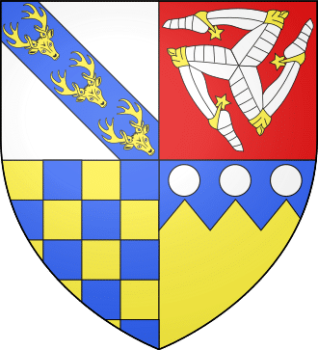
On 20 March 1470 the Duke of Clarence and Earl of Warwick sought assistance from Thomas Lord Stanley.
The Battle of Losecote Field had made the Duke of Clarence and Earl of Warwick’s involvement in the Lincolnshire rebellion quite clear. Items in the baggage train had implicated them.
Furthermore, the confessions of captured men, such as Sir Robert Welles, also frequently reference the pair. For Clarence and Warwick, this meant find support quickly, or flee.
On 20th March 1470, the pair headed to Manchester to seek the Earl of Warwick’s brother in law, Lord Stanley’s support. As the Paston’s recorded a week later, it was to no avail for Clarence and Warwick:
“And when the Duke of Clarence and Earl of Warwick heard that the king was coming toward them, incontinent they departed and went to Manchester, hoping to have had help and succour of Lord Stanley; but in conclusion there they had little favour, as it was informed the king, and so men say they went westward…”
Newsletter to John Paston 27th March 1470.
Warwick and Clarence did secure additional support for the rebellion. Soon they had Edward IV in flight to Burgundy where he spent a short amount of time in exile and, initially, quite isolated. It enabled Warwick to reinstall King Henry VI as monarch and establish a Lancastrian Government, with Warwick himself in virtual control of the country.
The Readeption of Henry VI saw many local governance systems collapse, with some counties recording no accounts for the duration of the re-established Lancastrian regime.