Whilst the Yorkists had won a decisive victory at Towton, it did not mean that they had total control of the country. There was armed resistance in pockets and strong Lancastrian sentiment in large parts of England and Wales.
In early February 1462, the King received reports of growing unrest around the country. The North-West was unruly, virtually lawless in places. The same was spreading into other remote parts of the country. Sedition was on the rise. Outbursts of violence were happening.
The administration of local justice and estate management was, in places, severely hampered. Action was needed, and on 12 February, two significant decisions were taken by the crown.
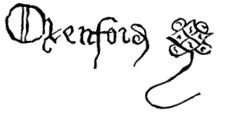
The arrest of John de Vere, Earl of Oxford and his son, Aubrey
First, a commission of 23 barons and 10 judges was appointed to investigate and deal with the insurrections.
Secondly, news of a plot reached the court, and the response was fast and decisive.
The plot implicated the Earl of Oxford. Action was swift. Oxford and his eldest son were arrested on 12 February 1462.
They were tried by the Constable of England, John Tiptoft, becoming the first senior noble to be beheaded due to the court of the man who was to become known as ‘the butcher of England’